Building a Resilient Posterior Chain for Long-Term Back Health

The Mechanics of Spinal Stability and Posterior Chain Strength
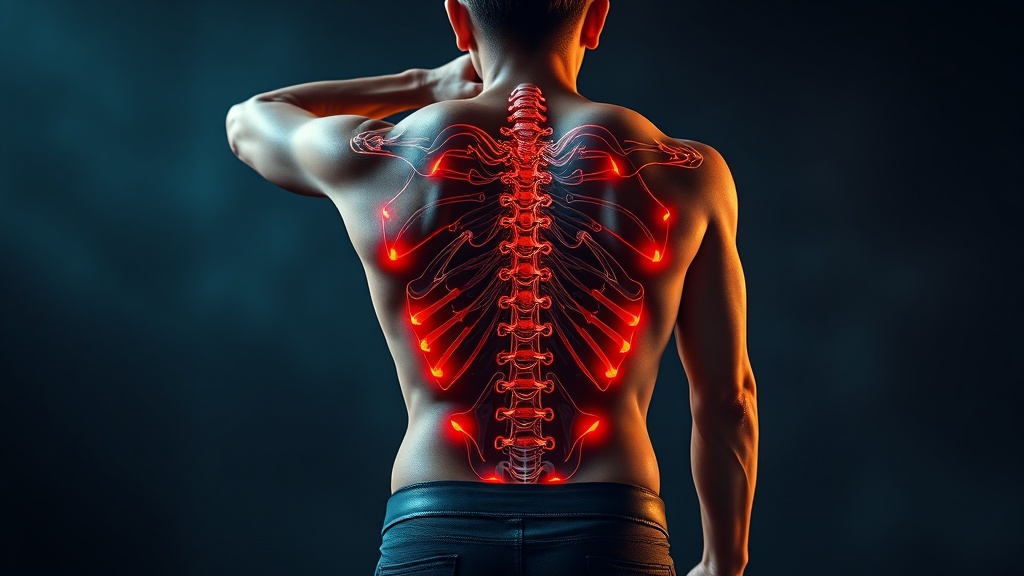
Imagine you're lifting a heavy box from the floor. Your spine bends, your core feels weak, and suddenly, a sharp, radiating sensation shoots through your lower back. This isn't just a momentary discomfort; it's a sign of a structural failure in your kinetic chain. For many professionals, the issue isn't a lack of strength, but a failure in how force is distributed through the posterior chain—the complex network of muscles including your glutes, hamstrings, and spinal erectors. When these muscles fail to act as a stable foundation, the load shifts directly onto your intervertebral discs and ligaments. This post examines how to engineer a more stable posterior chain to prevent injury and maintain function as you age.
A functional posterior chain acts as a shock absorber for the spine. When the glutes and hamstrings are properly engaged, they take on the heavy lifting of hip extension, shielding the lumbar spine from excessive shear forces. If your glutes are dormant—a common result of prolonged sitting—your lower back becomes the primary mover. This is a mechanical error that leads to chronic pain and structural degradation over time.
Why Does My Lower Back Hurt During Deadlifts or Squats?
The sensation of pain during heavy lifts often stems from a lack of intra-abdominal pressure or a failure in the hip hinge pattern. If you're rounding your spine under load, you're creating a lever that your spinal muscles can't support. This creates a high-stress environment for the discs. To fix this, you need to view the lift not just as a movement of weight, but as a management of tension. You're looking for a rigid torso and a mobile hip.
Consider the role of the transverse abdominis and the oblique muscles. These aren't just for aesthetics; they provide the internal pressure necessary to stabilize the spine. Without this internal bracing, the spine is a cantilever under too much weight. A proper setup requires a bracing sequence that mimics the way an engineer would stabilize a bridge. You're creating a rigid cylinder of pressure around your core to support the load.
Movement patterns like the Romanian Deadlift (RDL) are excellent for teaching the body to hinge at the hips rather than the spine. Instead of bending at the waist, you're pushing your hips back, keeping the spine neutral and the tension in the hamstrings. This shift in focus from 'lifting weight' to 'moving the hinge' is what separates a sustainable training protocol from a high-risk one.
How Can I Strengthen My Glutes Without Increasing Back Pain?
Many people attempt to strengthen their glutes through high-impact movements, which can actually aggravate existing back issues. Instead, focus on movements that emphasize hip stability and controlled tension. Exercises like the glute bridge or the hip thrust are excellent because they keep the spine in a relatively neutral, supported position while forcing the glutes to work. This builds the strength needed for daily tasks without the high shear forces of a heavy barbell squat.
One common mistake is over-relying on spinal extension to finish a movement. For example, in a glute bridge, people often arch their lower back at the top of the movement to get more height. This is a mistake. The movement should end when your hips are level with your torso, not when your spine is arched. You're training the glutes to stabilize, not the spine to overextend. For more technical guidance on movement patterns, the Strength Level database provides a good benchmark for understanding where your lifting capacity sits relative to your body weight.
You should also consider the impact of daily mobility on your strength. If your hip flexors are chronically tight from sitting, they will pull your pelvis into an anterior tilt. This position puts your lower back in a constant state of flexion, making it much harder for your posterior chain to engage effectively. Mobility work isn't just about flexibility; it's about restoring the mechanical alignment required for strength training. The National Institutes of Health has extensive research on how muscular imbalances and posture affect spinal health.
What Are the Best Exercises for Posterior Chain Longevity?
Building a resilient back requires a variety of movement planes. You can't rely on a single exercise. A well-rounded program should include:
- Hip Hinge Variations: Deadlifts, RDLs, and kettlebell swings. These build the capacity for heavy loads.
- Unilateral Work: Single-leg deadlifts or lunges. These address imbalances and improve stability.
- Posterior Isolation: Glute bridges and hamstring curls. These ensure specific muscles are being taxed.
- Isometric Holds: Planks or weighted carries. These build the endurance needed to maintain a rigid core during long-duration activities.
The goal is to create a system that is both strong and adaptable. A rigid spine is good, but a spine that can't move at all is a liability. You want a core that is stable under load but remains functional across various ranges of motion. This means training the ability to maintain a neutral spine while the hips are moving through their full range. This is the difference between a body that is merely strong and a body that is truly functional.
When you approach your training with this level of detail, you aren't just lifting weights; you're optimizing a biological machine. You're managing the stress-to-recovery ratio to ensure that your training leads to adaptation rather than degradation. This is the path to long-term function and a body that remains capable of handling the demands of life, well into your later decades.