How to Build a 10-Minute Morning Mobility Routine After 40

This post covers a simple, repeatable 10-minute morning mobility routine built specifically for adults over 40. You'll learn which joints to target, what movements to prioritize, and how to build a habit that sticks — all without expensive gear or extreme flexibility. After 40, morning stiffness isn't just an annoyance. It's a signal that your joints need consistent, intentional care to keep you strong, functional, and independent for decades. The good news? Ten minutes of deliberate movement each morning can restore range of motion, reduce injury risk, and set a physical baseline for the rest of the day.
Why Does Mobility Decline After 40?
It happens because collagen production drops, synovial fluid thins, and — for most professionals — daily life involves far more sitting than moving.
Tendons lose water content like a sponge left in the sun. Cartilage receives less nourishment because compression and decompression cycles (walking, squatting, reaching) are what pump nutrients into joint surfaces. Muscles atrophy when not challenged, and the ones that do get used — hip flexors, upper traps, pecs — tighten into shortened positions from desk posture. The result? A spine that rounds forward, hips that don't fully extend, and ankles that feel locked in concrete.
That said, this decline isn't a life sentence. It's a maintenance issue. Like a car that needs oil changes, your body requires regular movement to keep joints lubricated and tissues resilient. The CDC notes that adults who stay physically active maintain better joint health and functional independence as they age. Regular physical activity helps older adults maintain mobility. When you stop moving through full ranges of motion, your nervous system tightens the brakes. It thinks you're safer with less motion. You have to retrain it with consistent, pain-free movement. Ten minutes is enough to send that signal daily.
What Should a 10-Minute Morning Mobility Routine Include?
A good routine hits the ankles, hips, thoracic spine, and shoulders — the four areas that lock up fastest after 40.
You don't need a gym membership or a TRX Suspension Trainer. A Gaiam Premium Print Yoga Mat and enough floor space to lie down are plenty. Set a timer — an Apple Watch, a smartphone, or even a $10 digital kitchen timer from IKEA — so you're not guessing.
Ankles (Minutes 0–2)
Tight ankles force the knees and hips to compensate during every step and squat. Start with ankle circles: 10 slow circles in each direction per foot. Then do a knee-to-wall stretch. Stand facing a wall, front toes one fist-width away from the baseboard. Drive the front knee toward the wall without letting the heel lift. Hold for 30 seconds, then switch. If the heel pops up, move the foot closer. You're looking for a gentle stretch in the calf and Achilles, not a burning sensation.
Hips (Minutes 2–4)
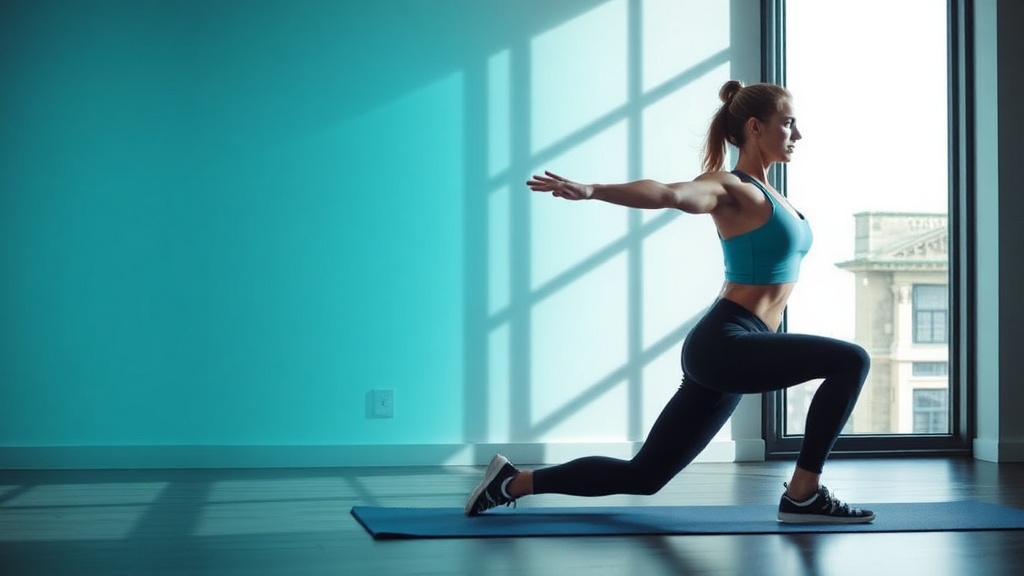
The 90/90 stretch is hard to beat for opening both internal and external rotators. Sit with the front leg bent at 90 degrees and the back leg bent at 90 degrees behind you. Keep the torso tall, then hinge forward over the front shin until you feel tension in the outer hip. Hold for 45 seconds, switch sides, and repeat. Follow that with a half-kneeling hip flexor stretch. One knee on the mat, the other foot forward. Tuck the tailbone slightly and shift the hips forward. Most people flare the ribs here — don't. Keep the ribs down and the glute of the back leg gently squeezed.
Thoracic Spine (Minutes 4–6)
A stiff t-spine turns the lower back and neck into overworked substitutes. Begin with cat-cow for 60 seconds. On all fours, round the spine up like an angry cat on a rainy day, then arch it down while looking forward. Move slowly and breathe out on the round. Next, thread the needle. Reach one arm under the opposite armpit, letting the shoulder and temple rest toward the floor. Hold for 30 seconds each side. For an added release, lie lengthwise over a Rogue Foam Roller, arms out in a T, and let gravity open the chest for 60 seconds.
Shoulders (Minutes 6–8)
Wall slides retrain overhead mechanics without load. Stand with your back, head, and butt against the wall. Arms start in a W position, elbows and wrists touching the wall. Slide up to a Y, then back down. Do 10 reps. The catch? Most people arch their lower back or let the ribs flare to fake range of motion. Keep the lower back pressed to the wall. After that, slow shoulder circles — 10 forward, 10 back — help synovial fluid circulate through the glenohumeral joint.
Full-Body Flow (Minutes 8–10)
Finish with a deep squat hold. Feet shoulder-width apart, heels down, chest up. Hang out here for 30 seconds. It's a diagnostic tool — if the heels lift or the back rounds, that's information about what needs more work. Close with a gentle downward dog pedal, alternating bending each knee to stretch the hamstrings and calves.
Here's a quick reference for how to organize the movements:
| Movement Type | Best For | When to Use It |
|---|---|---|
| Dynamic Stretching | Warming up joints and increasing blood flow | First 5 minutes (ankle circles, cat-cow, wall slides) |
| Static Stretching | Lengthening tight tissues and calming the nervous system | Final 3–5 minutes (90/90 hold, hip flexor stretch, deep squat) |
| Controlled Articular Rotations (CARs) | Maintaining joint range and signaling safety to the brain | Anytime, especially for stiff shoulders and hips |
How Do You Build a Routine That Actually Sticks?
You anchor it to an existing habit, keep the protocol identical for the first 30 days, and track completion instead of performance.
Habit stacking works because the brain loves predictable cues. Do your mobility right after pouring coffee but before checking email. Or pair it with brushing teeth — mat down before the toothbrush goes back in the cup. The environment matters, too. Lay out the Gaiam mat the night before. Sleep in shorts and a t-shirt that work for movement. Remove every friction point between waking up and starting the first ankle circle.
Here's the thing: motivation is unreliable. Structure isn't. If you wait until you feel like it, you'll skip it. Treat the ten minutes like brushing your teeth — non-negotiable. Set a recurring phone alarm labeled "Mobility" (not "Work Out" — that sounds like a bigger commitment than it is). The catch? Many people try to perfect the routine before they've practiced it. They hunt for the ideal sequence, watch twenty videos, and never start. Pick four movements. Do them badly at first. Consistency beats choreography.
Worth noting: tracking streaks in a simple notebook or the Apple Fitness app creates a visual record of consistency. One Mayo Clinic study found that adults who tracked daily movement habits were significantly more likely to maintain them long-term. Mayo Clinic guidelines on stretching and flexibility. Start with five minutes if ten feels overwhelming. It doesn't matter if you're stiff or if the dog walks across the mat halfway through. The goal isn't a perfect pigeon pose. It's repetition. After three weeks, the routine will feel less like a chore and more like a physical yawn — something your body expects and enjoys.
Can 10 Minutes Really Make a Difference?
Yes — research consistently shows that short, daily mobility work improves range of motion, reduces injury risk, and decreases morning stiffness more than occasional long sessions.
Think about the math. Ten minutes daily equals five hours per month. That's sixty hours per year of joint care. Compare that to one hour-long yoga class every two weeks. The frequency wins because the nervous system responds best to regular, low-stress signals that movement is safe. Sporadic sessions don't build that trust. A 2023 review in the Journal of Strength and Conditioning Research found that brief, daily mobility protocols produced measurable improvements in hip and ankle range of motion in adults over 40. Research on flexibility and aging via PubMed.
That said, ten minutes won't turn you into a gymnast. It will, however, make bending down to tie your shoes feel easier. It'll make your squat safer. It'll reduce the snap-crackle-pop when you stand up from a chair. Over months, those small inputs compound into better posture, less lower back irritation, and a wider movement vocabulary for sports, travel, and daily life. Small inputs. Compounding outputs.
Pick one movement for each area — ankle, hip, spine, shoulder. Set a timer on your Apple Watch or phone. Tomorrow morning, before the inbox fills up and the day starts making demands, spend ten minutes moving through these ranges. Your joints will notice. Your training will benefit. And ten years from now, you'll be glad you started.
Steps
- 1
Start with gentle neck and shoulder rolls to wake up the upper body
- 2
Move through hip circles and cat-cow stretches to loosen the spine and hips
- 3
Finish with deep breathing and a standing quad stretch to set the tone for the day