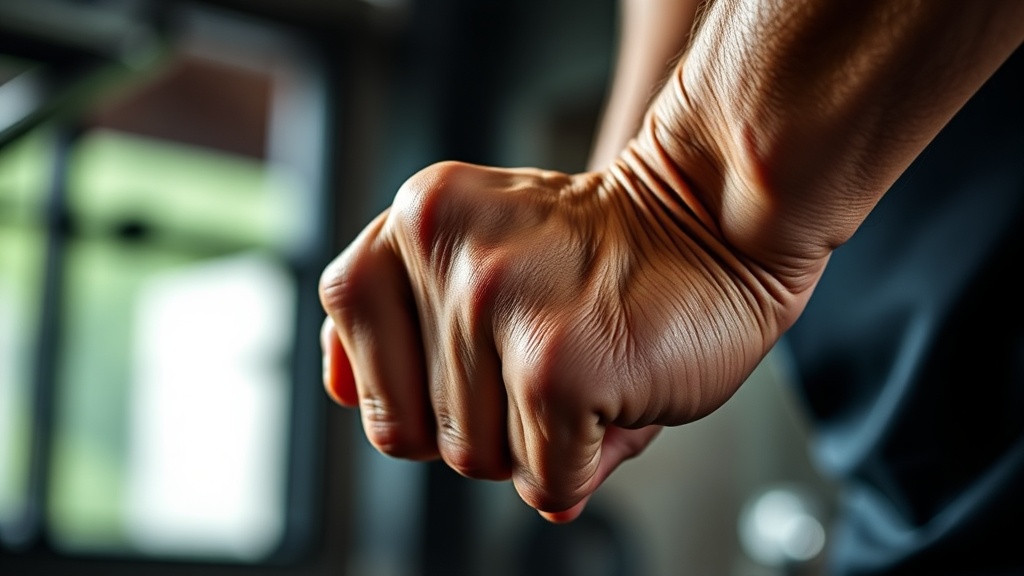
Why You Should Focus on Grip Strength for Long Term Health

Most people view grip strength as a secondary metric—a byproduct of heavy lifting or a minor indicator of how much weight you can carry in a grocery bag. This is a fundamental misunderstanding of human physiology. Grip strength is not just a measure of hand power; it is a high-fidelity proxy for total body strength, neurological integrity, and long-term cardiovascular health. For the professional over 40, developing a robust grip is one of the most efficient ways to track aging and ensure functional independence. This post examines the mechanical and systemic importance of grip strength and provides a framework for integrating it into your training.
The Biometric Value of Grip Strength
In the world of systems architecture, we look for "canary" metrics—small, measurable indicators that signal whether a larger, more complex system is failing or functioning optimally. In human biology, grip strength serves this exact purpose. Clinical studies have consistently shown a high correlation between handgrip strength and overall mortality rates. It is a predictive marker for frailty and a leading indicator of cardiovascular health.
When you measure your grip strength using a JAMAR Dynamometer, you aren't just testing your ability to squeeze a handle. You are measuring the efficiency of your central nervous system (CNS) to recruit motor units. A decline in grip strength often precedes a decline in total body muscle mass (sarcopenia) and can signal systemic issues such as chronic inflammation or declining hormonal profiles. For men and women in their 40s and 50s, maintaining or increasing this metric is a non-negotiable component of a longevity-focused fitness strategy.
The Neurological Connection
The connection between the hand and the brain is disproportionately large. The homunculus—the map of the human body in the brain—allocates a massive amount of cortical space to the hands and fingers. Because of this high density of neural representation, training your grip involves significant neurological demand. Improving your grip strength requires more than just growing the muscles in your forearms; it requires refining the signal from your brain to your peripheral nervous system. This makes grip work an excellent tool for maintaining cognitive-motor pathways as we age.
The Mechanical Role of the Grip in Compound Movements
If you are following a strength training program designed to build muscle without joint pain, you have likely encountered the "weak link" phenomenon. This occurs when your primary movers—such as your lats during a deadlift or your pectorals during a bench press—are capable of lifting more weight than your hands can hold. When the grip fails, the entire movement pattern collapses.
From an engineering standpoint, the grip is the "interface" between the load and the human machine. If the interface is unstable or weak, the integrity of the entire system is compromised. This often leads to compensatory patterns. For example, if you cannot hold a heavy dumbbell during a goblet squat because your grip is failing, you may begin to round your upper back or shift your weight to your toes to compensate for the perceived instability. Over time, these compensations lead to the very injuries we aim to avoid, such as lower back strain or shoulder impingement.
Types of Grip Strength
To build a truly functional grip, you must train more than just the ability to squeeze hard. There are three distinct mechanical functions of the hand that require targeted work:
- Crush Grip: This is the most common form, used when squeezing an object between the palm and the fingers (e.aly, a heavy medicine ball or a standard barbell).
- Pinch Grip: This involves the ability to hold objects between the thumb and the fingers (e.g., holding a weight plate by the edges). This is crucial for stabilizing objects and is often a neglected component of training.
- Support Grip: This is the ability to hold a weight for an extended duration (e.g., a Farmer's Walk). This builds the endurance necessary for long-duration functional tasks.
Practical Implementation: The Programming Framework
You do not need to spend an hour a day squeezing rubber balls. In fact, excessive high-intensity grip work can lead to tendonitis in the elbows (medial or lateral epicondylitis), which is a common failure point for older trainees. Instead, treat grip strength as a modular component of your existing sessions. I recommend a three-pronged approach: heavy loading, isometric holds, and functional carries.
1. Heavy Loading (Crush Grip)
Integrate heavy, low-repetition movements into your primary lifting days. If you are performing a deadlift or a heavy row, do not use lifting straps for every single set. Use straps only when your grip is truly the limiting factor for your primary muscle group, but allow your hands to handle the "sub-maximal" loads. This builds the raw crushing power required for heavy lifting.
2. Isometric Holds (Support Grip)
Isometric holds are highly effective because they require zero momentum and focus entirely on tension. At the end of a workout, perform a Farmer's Carry. Use heavy kettlebells, such as a Cast Iron Kettlebell or a PowереBelt accessory, and walk for 30 to 60 seconds. Focus on keeping your shoulders packed and your core braced. This builds the structural integrity of the shoulder girdle alongside the grip.
3. Pinch Training (Precision and Stability)
Once a week, incorporate a pinch-specific movement. A highly effective method is the Plate Pinch. Take two 5lb or 10lb weight plates, smooth sides facing out, and hold them together using only your fingers and thumb. This targets the intrinsic muscles of the hand and the thumb, which are often the first to weaken during the aging process. This also improves the stability required for complex tasks like handling tools or even typing with precision.
Avoiding Common Errors and Overuse Injuries
The biggest risk when increasing grip volume is the inflammation of the tendons in the forearm. Because the muscles of the forearm are small and the tendons are relatively thin, they can easily be overloaded. If you feel a sharp or burning sensation on the inside or outside of your elbow, you have exceeded your current capacity.
To mitigate this, follow these three rules:
- Prioritize Recovery: Grip training is taxing on the CNS. Do not perform heavy grip work on consecutive days. If you did heavy deadlifts on Tuesday, do not perform heavy Farmer's Carries on Wednesday.
- Monitor Forearm Tension: If your forearms feel "tight" or "pumped" during non-training activities, such as driving or typing, you are likely overtraining.
- Incorporate Extensor Work: Most people only train the "closing" of the hand (flexors). To maintain balance and prevent injury, you must also train the "opening" of the hand (extensors). Use a resistance band to practice opening your fingers against tension. This creates the structural balance necessary for long-term joint health.
Summary of the Data-Driven Approach
Treating grip strength as a vital sign rather than a vanity metric changes how you approach your training. It moves the focus from "how much can I lift" to "how well is my system functioning." By incorporating crush, pinch, and support grip training into your weekly routine, you are not just building bigger forearms; you are building a more resilient, functional, and durable version of yourself. This is the essence of the FitForty philosophy: building a body that is engineered for the long haul.