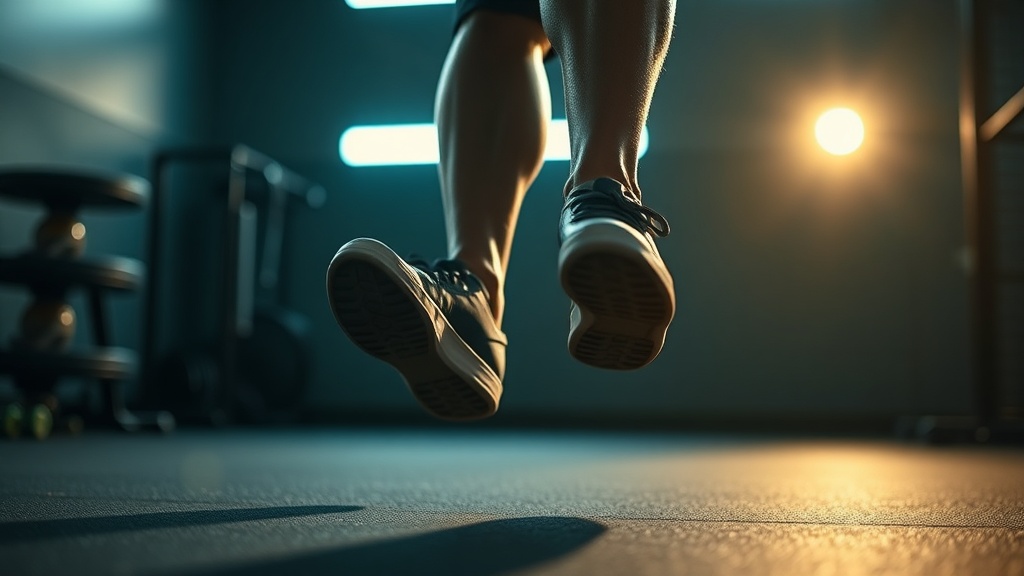
Why Your Feet Are the Missing Link in Your Strength Training

Your Foundation Isn't As Solid As You Think
Most lifters treat their feet like passive platforms—something to stick in a shoe and forget about while they chase bigger numbers on the squat rack. That's a costly mistake. Your feet contain 26 bones, 33 joints, and over 100 muscles, tendons, and ligaments. They're your primary interface with the ground, and every force you generate (or absorb) travels through them. Neglect foot and ankle function, and you're building strength on a cracked foundation.
After 40, this oversight becomes especially problematic. Tissues lose elasticity. Joints stiffen. Compensation patterns creep in. Before you know it, knee pain, hip impingement, or lower back issues show up—seemingly out of nowhere. But they didn't come from nowhere. They started at the ground.
Why Do My Knees Hurt When I Squat?
The knee is a simple hinge joint—it mostly flexes and extends. It doesn't rotate well, and it doesn't like being twisted. When your ankle lacks dorsiflexion (the ability to pull your toes toward your shin), your knee has nowhere to go during a squat. It caves inward (valgus collapse) or shifts forward excessively, dumping shear forces into structures that aren't designed to handle them.
Here's the mechanics: limited ankle mobility forces a compensation chain. The foot pronates excessively to buy range of motion. The tibia internally rotates. The femur follows. Suddenly your knee is tracking inside your foot, and your patellar tendon is taking a beating. Research consistently links limited ankle dorsiflexion to increased knee injury risk—especially in activities requiring rapid direction changes or deep knee flexion.
The fix isn't more knee-focused work. It's upstream—at the ankle. Start with a simple assessment: kneel facing a wall, big toe about 5 inches away, and try to touch your knee to the wall without your heel lifting. Can't do it? You've got work to do.
What's the Best Way to Strengthen Weak Arches?
Arch support inserts are a band-aid—they offload the work your intrinsic foot muscles should be doing. Over time, those muscles weaken further, creating a dependency cycle. It's like wearing a neck brace because your neck muscles are sore; sure, it helps temporarily, but it won't make you stronger.
The "foot core system" (yes, that's the actual term researchers use) consists of the plantar intrinsic muscles that stabilize your arches dynamically. When these muscles fire properly, they create a stiff, responsive foot that transmits force efficiently. When they don't, you get "floppy foot syndrome"—excessive pronation, collapsed arches, and force leaks at every step.
Start with short foot exercises: stand barefoot, press your big toe into the ground, and try to "shorten" your foot by drawing the ball of your foot toward your heel without curling your toes. Hold for 10 seconds. Repeat until the muscles along your arch fatigue. This isn't glamorous work, but it's foundational—literally. Studies show that foot core training improves balance, reduces injury risk, and enhances running economy.
Progress to single-leg balancing with eyes closed, then add perturbations—light pushes from a partner or a band. Your feet are sensory organs; they need challenging input to stay sharp.
How Much Ankle Mobility Do I Actually Need?
Minimum viable ankle dorsiflexion for a full-depth squat is about 4 inches from wall to toe with the knee touching. But minimum isn't optimal—especially if you play sports, hike, or want to stay agile into your 60s and beyond. I recommend aiming for 5 inches minimum, with 6+ being the gold standard for active aging.
Mobility work should be daily—brief but consistent. The classic wall ankle mobilization works well: face a wall, place your toes 4-5 inches away, and drive your knee forward and slightly outward, tracking over your second toe. Don't let your heel peel off the ground. Hold for 2 seconds, return, repeat 10-15 times per side.
Add eccentric calf raises for tissue resilience: stand on a step, rise up with both feet, then lower slowly (3-4 seconds) on one leg. The gastrocnemius and soleus are your primary ankle stabilizers—they need strength through full range, not just the mid-range where most people live.
For stubborn ankles, try banded joint mobilizations. Anchor a resistance band around a rack at ankle height, loop it around the front of your ankle (just below the bony bumps), step back to create tension, then drive your knee forward. The band provides a posterior glide of the talus bone, which often gets "stuck" and limits dorsiflexion. Physical therapists use this technique to restore normal arthrokinematics without forcing the joint.
The Hidden Cost of Modern Footwear
Let's talk about your shoes. Most athletic footwear is designed for comfort and marketing appeal, not function. Thick cushioning, improved heels, and narrow toe boxes actively reshape your feet—usually for the worse. When your toes are squeezed together, they can't splay and grip. When your heel is permanently improved (even an inch), your calves shorten and your ankle mechanics change. When cushioning absorbs impact, your proprioceptive feedback dulls.
This isn't a manifesto for barefoot living (though there's merit in that direction). It's a case for mindful footwear rotation. Spend some time barefoot at home. Use minimalist shoes for walking and easy training. Save the cushioned kicks for high-impact activities where protection matters. Your feet need variety, not uniformity.
Programming Foot and Ankle Work
Treat foot training like any other strength work—progressive and intentional. Here's a simple weekly structure:
- Daily: 2-3 minutes of ankle mobility (wall drills, banded mobilizations) and short foot holds
- Pre-training: Dynamic ankle prep—leg swings, ankle circles, calf pogo jumps to wake up the tissues
- 2x weekly: Loaded calf raises (3 sets of 8-12, full range, controlled tempo)
- 2x weekly: Single-leg balance work (eyes open progressing to closed, unstable surfaces)
That's it. Fifteen minutes spread across your week—less time than you spend scrolling between sets.
The Payoff: Better Everything
Strong, mobile feet don't just prevent injuries. They improve force transfer, which means heavier lifts. They enhance proprioception, which means better balance and coordination. They allow natural gait mechanics, which means more efficient walking and running. They distribute load properly, which means less wear on your knees, hips, and spine.
Think of it this way: every exercise is a foot exercise if you're standing on the ground. The question is whether your feet are helping or hindering. Start paying attention to them now, and you'll still be squatting, hiking, and playing pickup games decades from now. Ignore them, and you'll spend your 50s managing chronic pain that could've been avoided with a little daily maintenance.
Your feet have carried you this far. Maybe it's time you returned the favor.